This organization helps improve living conditions of border communities, They “provide the inspiration, direction and vision necessary to build stronger, healthier communities — from within.”
This helps raise awareness and further develop an open, rule-based, predictable, non-discriminatory trading and financial system This could bring together mutual migration laws which is needed because issues like 'human trafficking feeds on poverty and creates greater restrictions to legal immigration.' Better border control like a well-paced migration from poorer to richer countries; example: Germany: special visa for IT workers.
These millennium goals help raise awareness, A way to convince the population to stay in rural areas for more opportunities to create more job opportunities
to find the best out of their main asset, their labour. Enhancing the level of education in poorer countries will provide a better chance to improve country’s economy
in order for their labour market to depend on itself.
These issues are quite Interconnected: once employment is available in the poorer countries, those who cannot/does not leave the country may still have a chance to work: this is the “right kind of growth” in order to reduce poverty in developing countries, hence reduce migration patterns.
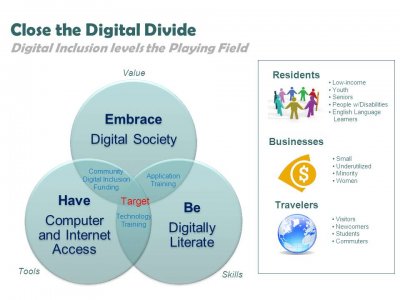
To reduce the impact of the digital divide there are several things to implement, in broad terms it is necessary:
• Have computer and Internet access: People need affordable and reliable computers and broadband Internet access.
• Be digitally literate: people need to understand digital technologies and how to use them effectively to achieve their educational, economic, civic, and social goals.
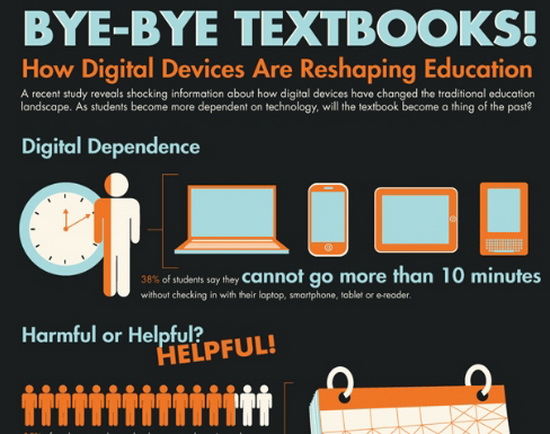
Education has become increasingly dependent on the Internet and digital formats - especially higher education, though high, It was an inevitable evolution
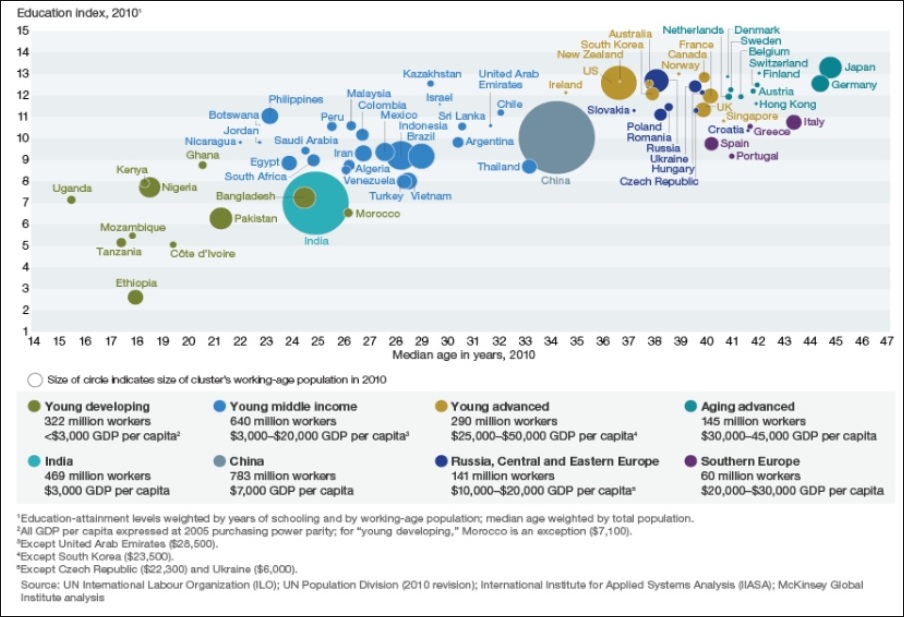
The lowest median age is in Uganda at 15.5 yrs and the lowest level of education is Ethiopia at 2.5 years with a considerable size of working population. “Young developing” are mostly African and some middle eastern countries. “Young middle income” are mostly south American, the more advanced African countries, south Asian countries. "Young advanced income” are for the developed countries. The highest median working age is in Japan at 45 yrs and the highest level of education is in Japan at 13.5 yrs.
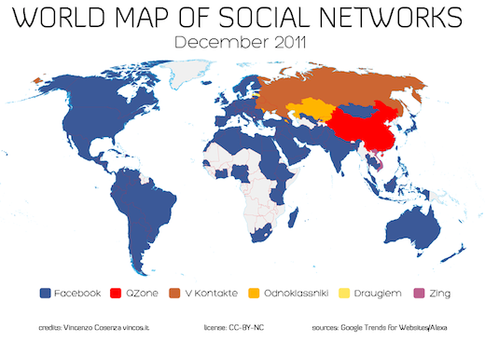
Internet bring new means of communication such as social networks or email. those who do not access it are sidelined and not taking advantage of these benefits to open to the world. 82% of the world's online population of 1.2 billion users now use social networks.
The Internet is rapidly becoming a primary medium for communications, commerce, entertainment and finding jobs. Future economic, community participation and political advancement for these disadvantaged groups may depend on access to computers, the Internet and broadband technology. Information on government services, health and education are also increasingly going online.