Cameron Bernhardt, Erin Johnson, Byron To, Vincent Tong
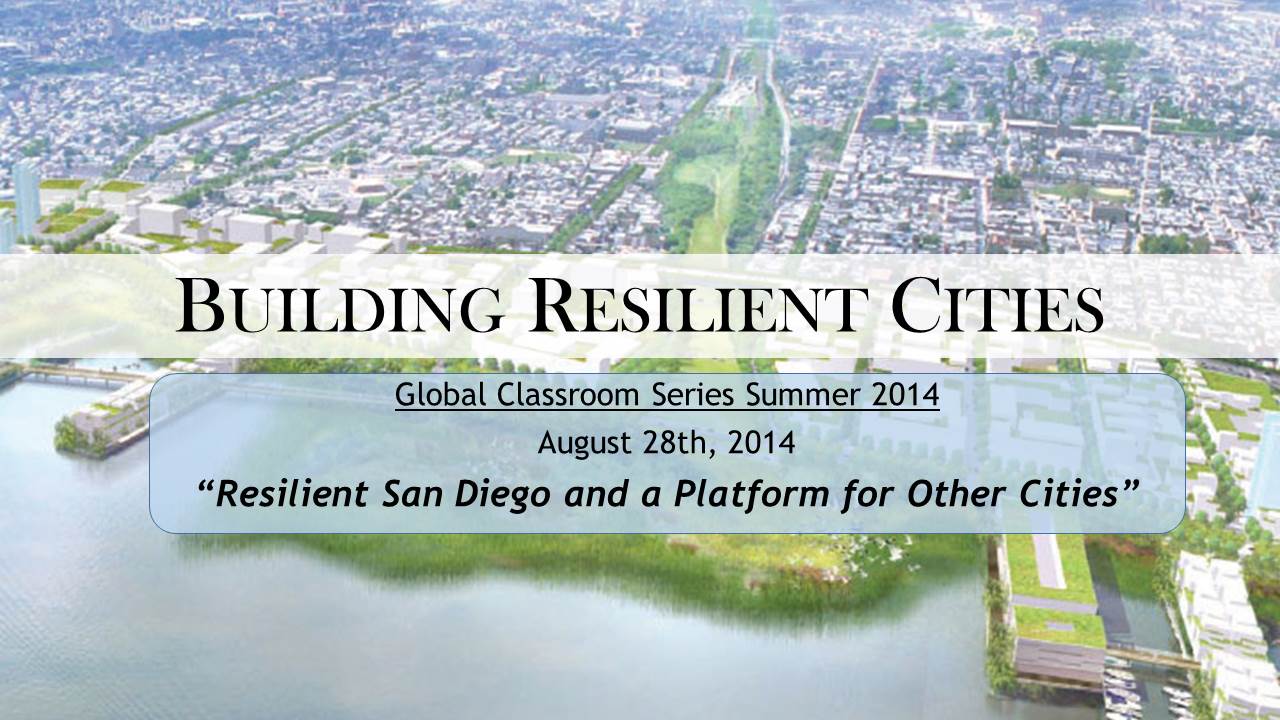
A PDF of the presentation on "Resilient San Diego and a Platform for Other Cities," created and presented by Cameron Bernhardt, Erin Johnson, Byron To, and Vincent Tong for the Global Energy Network Institute (GENI).
For the past decade, the concept of “sustainability” has dominated climate change conversation around the world. Sustainable development, which aims to meet present needs without sacrificing future well-being, has been an appropriate focus toward the threats that climate change and natural resource depletion pose to our society. However, sustainability is not strong enough, or resilient enough, to stand alone. Global climate change is no longer an event to anticipate and plan for; it is a
A PDF of the presentation on "Resilient San Diego and a Platform for Other Cities," created and presented by Cameron Bernhardt, Erin Johnson, Byron To, and Vincent Tong for the Global Energy Network Institute (...
For the past decade, the concept of “sustainability” has dominated climate change conversation around the world. Sustainable development, which aims to meet present needs without sacrificing future well-being,...
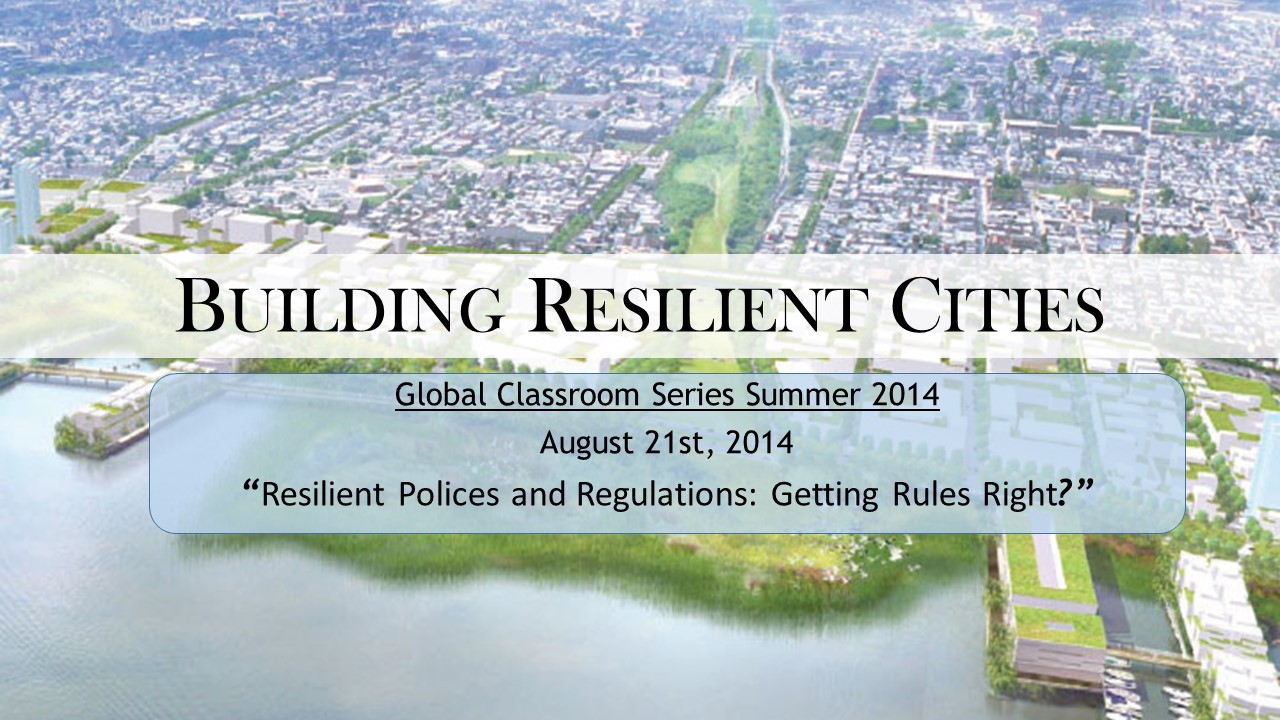
A PowerPoint presentation of "Resilient Cities 11: Resilient Polices and Regulations: Getting Rules Right" created by Byron To, Aly Zamora, Andrew Oh, and Won Mo Yang
With a myriad of different policies around the environment on all levels including the national, state, and even in the city of San Diego itself, there are examples from other regions that we can implement in our current system. The Regional Greenhouse Gas Initiative (RGGI) and Carbon Fee and Dividend Policy put caps on the carbon emissions on the power sector. Likewise, the Clean Air Act and the Clean Water Act manage the amount of hazardous pollutants in U.S. air and water, whereas, the National Environmental Policy Act (NEPA) requires companies to take into account the environmental impact of their actions. Even the President’s Climate Action Plan has strategies to tackle the issues related to the effects of climate change.
A PowerPoint presentation of "Resilient Cities 11: Resilient Polices and Regulations: Getting Rules Right" created by Byron To, Aly Zamora, Andrew Oh, and Won Mo Yang